
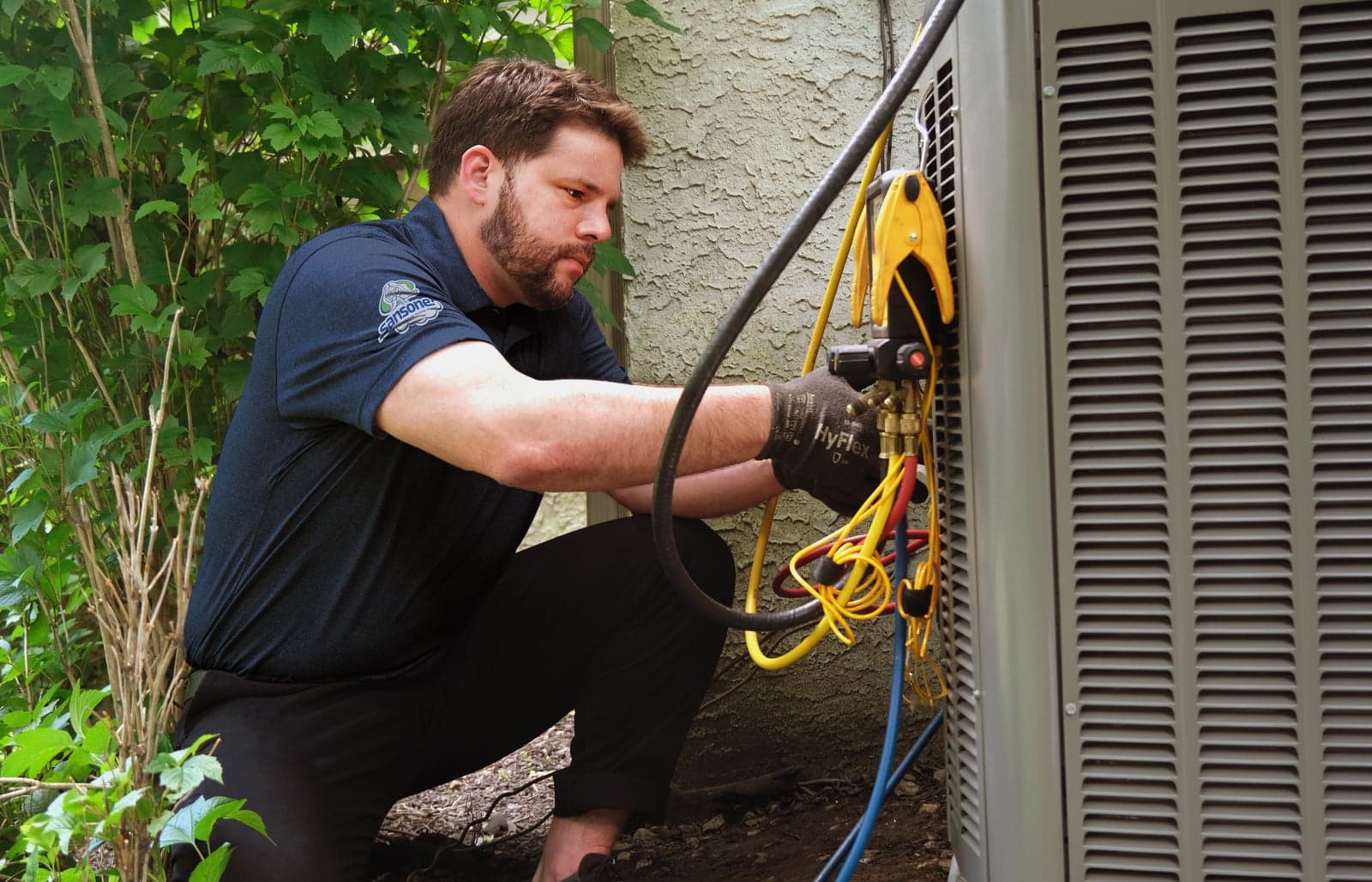
Regular air conditioner maintenance helps homeowners improve system efficiency, ensure consistent indoor comfort, and catch potential issues early. While homeowners can handle basic tasks like replacing filters and clearing debris, professional service is essential for complex repairs and system checks, ensuring reliable operation throughout hot, humid seasons.
On this page:
Why Regular AC Maintenance Matters
5 Simple AC Maintenance Tasks Homeowners Can Do
South Florida AC Maintenance Tips
When Should You Schedule Professional AC Service?
DIY vs. Professional AC Maintenance
Why Choose Sansone for AC Maintenance?
Schedule AC Service in Southeast Florida
Frequently Asked Questions
Your air conditioner plays a major role in keeping your home comfortable, especially during the hot, humid months in South Florida. While some AC maintenance should be handled by a professional, there are several simple tasks homeowners can complete themselves to help their system operate reliably and identify potential problems early.
If you live in Southeast Florida, Sansone serves homeowners throughout Palm Beach and Broward, including West Palm Beach, Fort Lauderdale, Boca Raton, and surrounding communities.
Why Regular AC Maintenance Matters
Regular air conditioner maintenance can help your system operate efficiently, maintain consistent indoor comfort, and reduce unnecessary wear on components. Simple tasks such as replacing a dirty filter and keeping the outdoor unit clear can help support proper airflow and system performance.
Neglecting routine maintenance can contribute to restricted airflow, longer run times, uneven cooling, higher energy use, and preventable service issues. South Florida's heat and humidity can also create additional challenges. Condensate drains can develop algae and buildup, while homes near the coast may experience faster corrosion from salt air.
Routine maintenance gives you an opportunity to catch these issues before they become larger problems.
5 Simple AC Maintenance Tasks Homeowners Can Do
Before performing any maintenance, turn off the system at the thermostat. If you are working near the outdoor unit, turn off power at the outdoor disconnect as well. Never attempt to work on electrical components or open the refrigerant circuit yourself.
1. Replace or clean your air filter regularly
A dirty air filter can restrict airflow and make your air conditioner work harder. Check your filter regularly and replace it according to the manufacturer's recommendations.
For many homes, a standard 1-inch pleated filter may need to be replaced every 1 to 3 months during periods of regular AC use. Homes with pets, indoor smoke, or higher levels of dust may require more frequent filter changes.
In areas such as Parkland and Wellington, seasonal pollen can also contribute to faster filter buildup, so check your filter more frequently when outdoor pollen levels are high.
2. Keep the outdoor AC unit clear
Your outdoor condenser needs adequate airflow to operate properly. Regularly check the area around the unit and remove leaves, grass clippings, dirt, and other debris.
Keep plants, stored items, and other obstructions away from the condenser. A general guideline is to maintain about 2 feet of open space around the sides of the unit and adequate clearance above it.
If the outdoor coil needs light cleaning, use a gentle stream of water and take care not to bend the aluminum fins. Never use a pressure washer or harsh chemicals on the unit.
3. Check the condensate drain
Your AC removes moisture from the air as it cools your home. That moisture collects in the condensate system and drains away from the indoor air handler.
South Florida's humidity can create conditions where algae and buildup develop inside condensate lines. A clogged drain can cause water to back up and potentially damage the surrounding area.
Look for signs such as:
Water around the indoor air handler
Musty odors
A float switch shutting the system off
Water accumulating near the condensate pan
If your system has an accessible condensate drain and your manufacturer's instructions permit homeowner maintenance, follow the recommended procedure for keeping the line clear. If the drain is clogged or water is already backing up, contact an HVAC professional rather than attempting to force a blockage through the system.
This is particularly useful for homeowners in Fort Lauderdale, Pompano Beach, and West Palm Beach, where air handlers may be installed in closets or laundry areas where a water leak can cause damage quickly.
4. Check your thermostat
Make sure your thermostat is set to Cool and that the temperature setting matches your comfort needs.
The U.S. Department of Energy recommends a setting of 78°F when you are home and need cooling, with a higher setting when you are away. A programmable or smart thermostat can automate temperature changes based on your schedule.
If your thermostat uses batteries, replace them according to the manufacturer's recommendations. Keeping the fan on Auto is also generally appropriate for normal cooling operation.
Smart thermostats can be especially useful for homeowners in Coral Springs, Plantation, and Sunrise who travel frequently or have homes that are occupied seasonally.
5. Look for signs of AC problems
A quick visual and operational check can help you identify problems that require professional attention.
Look for damaged or deteriorated insulation around the larger refrigerant line, ice buildup, unusual noises, water leaks, or visible corrosion around the outdoor unit.
Do not open refrigerant lines or attempt to repair the refrigerant circuit yourself. Refrigerant service requires the appropriate equipment and a qualified professional.
If you notice oily residue around refrigerant connections, repeated icing, unusual electrical sounds, or spreading corrosion, schedule an inspection with a professional.
South Florida AC Maintenance Tips
South Florida's climate creates maintenance considerations that homeowners in other regions may not encounter as often.
Humidity and condensate drainage
High humidity means your AC removes significant amounts of moisture from indoor air. That makes proper condensate drainage particularly important. Check for water around the air handler and have persistent drainage problems professionally inspected.
Coastal salt air
Homes near the coast, including communities such as Boca Raton, Deerfield Beach, and Lighthouse Point, can have greater exposure to salt air. Salt can contribute to corrosion on outdoor equipment over time. Keep the area around the condenser clean and have significant or spreading corrosion evaluated by a professional.
Tropical storms and heavy rain
Heavy rain, wind, and debris can affect outdoor AC equipment. After severe weather, inspect the area around the condenser and remove debris once conditions are safe. If the equipment appears damaged or the system does not operate normally after a storm, turn it off and schedule professional service.
Pollen and outdoor debris
Pollen, grass clippings, leaves, and other outdoor debris can accumulate around the equipment or contribute to faster filter buildup. Homeowners should check filters and the outdoor unit regularly, particularly during periods of heavier pollen or landscaping activity.
When Should You Schedule Professional AC Service?
Homeowners can handle basic maintenance, but professional service is still an important part of keeping an air conditioner operating reliably. An annual inspection or tune-up is generally recommended, with spring being a practical time to have the system checked before the hottest part of the year.
Schedule service sooner if you notice:
Reduced cooling or rooms that do not reach the set temperature
Ice forming on the system
Frequent on-off cycling
Unusually long run times without adequate cooling
Grinding, buzzing, or rattling sounds
Musty odors or water around the air handler
Unexpected increases in energy use
Repeated circuit breaker trips
Burning smells
If your AC runs continuously without maintaining the desired temperature, the system repeatedly trips a breaker, or you notice a burning smell, turn the system off and contact a professional.
What does professional AC maintenance include?
The exact scope of a maintenance visit depends on the equipment and service plan, but a professional inspection may include:
Inspecting electrical connections and system controls
Checking refrigerant system performance
Cleaning accessible coils and components
Checking condensate drainage
Evaluating airflow and blower performance
Measuring system temperature performance
Inspecting key components for signs of wear
Identifying developing problems
Providing recommendations for needed repairs or maintenance
Professional maintenance can help identify problems before they result in an unexpected breakdown.
DIY vs. Professional AC Maintenance
Task | DIY | Professional |
Replace air filter | Yes, following manufacturer recommendations | Verify sizing and airflow if problems continue |
Clear debris around outdoor unit | Yes, with light cleaning | Deep coil cleaning or fin repair |
Check condensate drainage | Basic visual inspection | Clear blockages and service condensate components |
Check thermostat | Yes | Diagnose control or wiring problems |
Refrigerant service | No | Leak testing, refrigerant service, and component repair |
When a task involves electrical components, refrigerant, significant water buildup, or internal system repairs, it is best to contact a qualified HVAC professional.
Why Choose Sansone for AC Maintenance?
When you need professional air conditioner maintenance in Southeast Florida, Sansone provides service designed around the needs of local homeowners.
Our licensed professionals can inspect your system, identify developing issues, explain recommended repairs, and help you understand how to keep your air conditioner operating properly.
Homeowners choose Sansone for:
Comprehensive AC inspections and tune-ups
Service tailored to your equipment and home
Experienced, licensed professionals
Clear recommendations and communication
Convenient scheduling and maintenance options
From coastal homes in Boca Raton and Deerfield Beach to homes throughout Palm Beach and Broward, Sansone helps homeowners keep their air conditioning systems ready for South Florida's demanding climate.
Schedule AC Service in Southeast Florida
Routine maintenance is one of the simplest ways to stay ahead of AC problems. Replacing your filter, keeping the outdoor unit clear, checking for drainage issues, monitoring your thermostat, and watching for warning signs can all help you identify potential problems early.
When your system needs professional attention, Sansone provides air conditioner maintenance and service throughout Southeast Florida, including West Palm Beach, Fort Lauderdale, Boca Raton, and surrounding communities.
Contact Sansone to schedule reliable AC service and get professional guidance based on your system, home, and maintenance needs.
Frequently Asked Questions
How often should I replace my AC filter?
Many 1-inch pleated filters should be replaced every 1 to 3 months during periods of regular use, but the correct interval depends on your system, filter type, household conditions, and the manufacturer's recommendations. Check your filter regularly and replace it when it becomes visibly dirty or airflow begins to decrease.
Can I hose down my outdoor AC unit?
You can use a gentle stream of water to remove light dirt and debris from the outdoor unit after turning off power. Avoid pressure washers and harsh chemicals, and take care not to bend the aluminum fins. For heavy buildup or damaged components, contact an HVAC professional.
Is it normal for my AC to run longer on very hot days?
Yes. High outdoor temperatures and humidity can cause an air conditioner to run for longer periods. However, if your system runs continuously without reaching the thermostat setting, struggles to cool certain rooms, or develops ice or water leaks, it should be professionally inspected.
What temperature should I set my thermostat in summer?
The U.S. Department of Energy recommends 78°F when you are home and need cooling, with a higher setting when you are away. A programmable or smart thermostat can help automate temperature changes based on your schedule.
Why does my AC freeze up?
A frozen AC can result from restricted airflow, a refrigerant problem, or an issue with the blower or other system components. Turn the system off and allow the ice to melt. If the problem continues after checking for a dirty filter, contact an HVAC professional to determine the cause.
How can I prevent problems with my AC condensate drain?
Check for water around the air handler and other signs of drainage problems. Follow your equipment manufacturer's maintenance recommendations for the condensate system. If you notice recurring clogs, water buildup, or a float switch shutting the system off, have the system inspected by a professional.
Related Articles
What do you need help with today?
Heating
No heat, strange smells, rising bills? We repair and replace heating systems to keep your home reliably warm.
Air Conditioning
AC blowing warm air? Uneven cooling in your rooms? We fix cooling issues fast and keep your system running smoothly all summer.
Plumbing
Our highly trained plumbers handle it all, from leaky faucets to full system installations and repipes.
Electrical
The smartest team in town. You need repair, installations, wiring, inspections, lighting — you name it.